
Crea Solution 2025 – P.IVA 02483631202
All rights reserved

Joma Speeds Up Processes with 3D CAD
Joma, founded in Toledo in 1965, is now the leading Spanish brand for sportswear. With a distribution network that spans over 70 countries and eight international subsidiaries including Germany, the United States, Brazil, Italy, and Hong Kong the company has established a strong and steadily growing global presence. In Italy, Joma has operated since 1999 with a branch in Cambiano, near Turin, which has become a strategic and commercial hub for the European market.
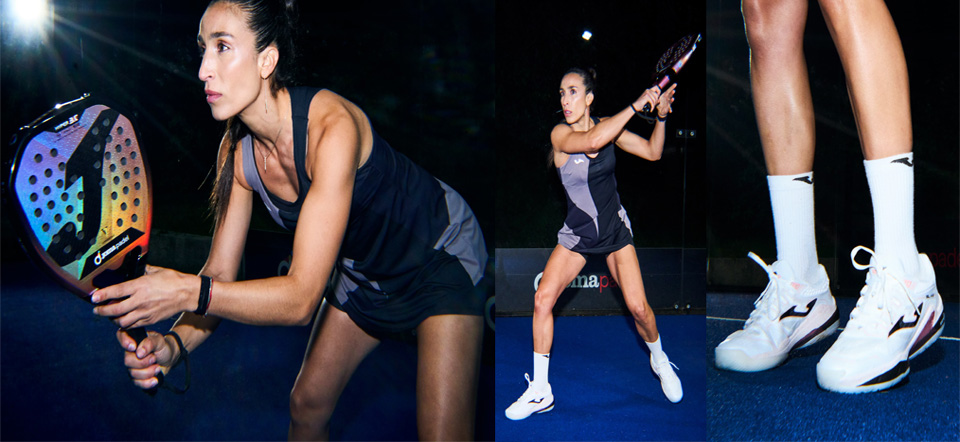
As part of its growth strategy, Joma has chosen to invest in digitalization as a key driver of innovation. The two main goals: to accelerate time to market and fully digitize the creative process, enabling the communication team to present new collections even before physical prototypes are made. The introduction of Browzwear’s 3D CAD marked a major turning point. Today, the entire design department works with Lotta, the version of the software tailored for fashion designers. Starting from 3D models supplied by the patternmaking team, designers can explore variations, experiment with cuts, mix fabrics and details, and bring their ideas to life in a highly interactive and realistic digital environment.
At the core of Joma’s digital prototyping is VStitcher, the advanced tool used by the pattern development team. This technology enables the creation of complete, accurate, and dynamic 3D prototypes, with highly realistic fitting simulations. The software factors in physical properties such as fabric tension, elasticity, and pressure on the body, delivering a true-to-life representation of how a garment behaves. A library of customizable avatars in over 20 different poses supports visualization of the garment in a range of scenarios, offering an impressive level of detail.

The integration of 3D CAD, 2D CAD, and the Create platform has also deeply transformed communication between the design and pattern departments. Once fashion sketches are created, they are immediately interpreted and converted into precise patterns, eliminating redundant steps such as printing, cutting, and manually assembling the first prototype. Even model fittings and subsequent corrections are drastically reduced, thanks to the extreme accuracy of the virtual simulations.
Lotta also stands out for its user-friendly interface and speed of use. The software integrates seamlessly with Adobe Illustrator and provides access to a large library of base models, fabrics, accessories, and finishes. This makes it easy to generate endless variations, supporting an agile, smooth, and dynamic design process. Another key advantage is the handling of realistic digital fabrics. With advanced tools to measure physical characteristics such as weight, drape, bending, and elasticity, users can import actual materials and achieve a highly accurate technical and visual simulation.
The implementation of these technologies has enabled Joma to optimize time, reduce costs, minimize waste, and significantly improve internal communication. 3D CAD is no longer just a technical tool, but a true creative and production engine, capable of supporting the company in building a new model for developing sportswear: more sustainable, faster, and more innovative.
The ability to visualize entire collections digitally before a single physical prototype is made has made the decision-making process much faster and more efficient. 3D garments can now be showcased on the e-commerce website even during development, offering customers a realistic preview and allowing the company to accelerate commercialization. Workflow has become more streamlined and responsive, with a tangible and measurable impact on time to market and the company’s ability to meet market demands.